
International Agency for the Prevention of Blindness (IAPB) World Association of Eye Hospitals (WAEH)
HomeOphthalmology

Ophthalmology Fellowship Training


Fellowship training is offered to enable postgraduate doctors to receive specialized training in the subspecialties. Clinical fellowship training combines outpatient and inpatient experience. The fellows are closely monitored to ensure that they are learning correct techniques and that ethical standards are maintained. Clinic responsibilities include evaluation of patients, documentation, pre-and post-operative care, and the management of complications. The fellows will attend workshops and scientific seminars, and will be assigned paper to present. Training in diagnostic tools is considered an important aspect of the fellowship.
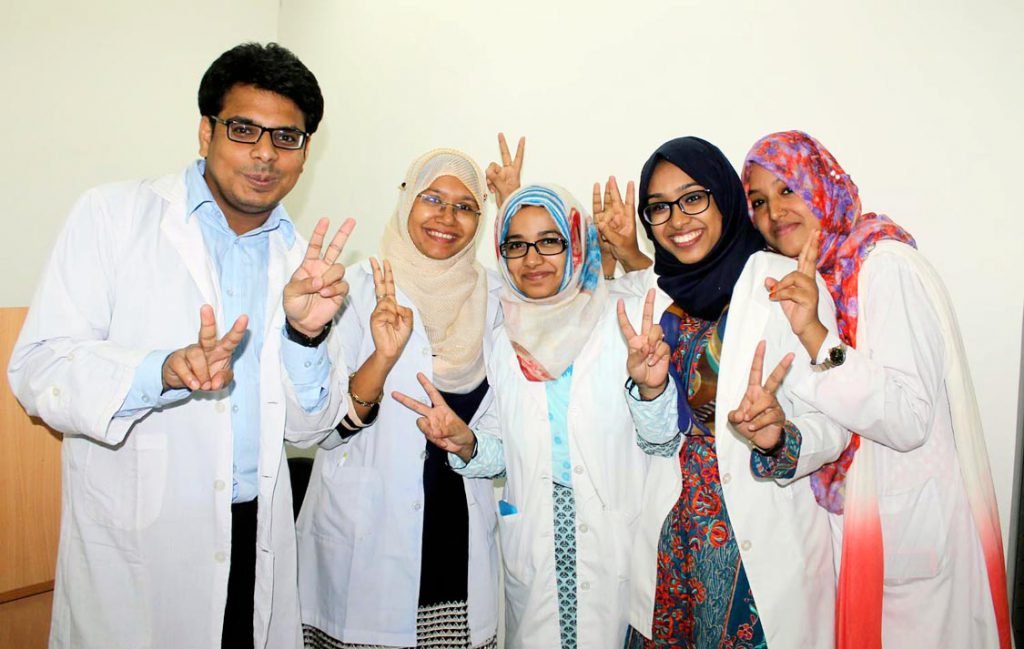
Only the long-term fellowship programme will provide hands on training in major surgeries. The operation theatre is equipped with the latest surgical machines and the surgeries can be watched live through CCTV.

The short-term fellowship programme does not provide hands-on training in major surgeries.

Ispahani Islamia Eye Institute and Hospital is the oldest and largest multispecialty referral eye hospital in Bangladesh. It is a non-profit organization. The emphasis is on quality eye care for all socio-economic sections of society. We are offering excellent learning opportunities for Ophthalmologists to upgrade their clinical knowledge and surgical skill in Vitreo Retina, Oculoplasty and Paediatric Ophthalmology & Strabismus through its 15-month Fellowship Program. The next course will commence from 31 October, 2016.


The Fellows are provided theoretical and hands-on training. The Institute and Hospital has a large flow of patients – around 1500 patients daily-which helps provide practical training in each sub-specialty. Clinical training includes observership, examination of patients and discussion sessions with the consultants. Surgical training includes observing, assisting the mentor in the OT and performing surgery under the close supervision of the mentor. There will also be opportunities to learn how to make presentations of scientific papers and how to do research for publication. Comprehensive log books will be used to evaluate their performance during their Fellowship training.

  1. FCPS/MS/DO or any equivalent degree in Ophthalmology recognized by the BMDC.
  2. Age limit should be 45 years on 1st January, 2017.

Fellows will be given a stipend/honorarium of Tk. 30,000/- per month when they will not receive salary/stipend from employer and/or any other agency.

Selection for Fellowship will be made on a competitive basis based on the results of a written test (MCQ) and a subsequent interview.


If you want to contribute, learn and grow, professionally and personally, this might be the best place for you as an ophthalmologist. Both Private and Government candidates are eligible to apply.


Interested candidates who fulfill the above requirements are requested to send their application on a prescribed to the Director (Education), Ispahani Islamia Eye Institute & Hospital, Sher E Banglanagar, Farmgate, Dhaka-1215.

Download Application Form

or

Email to education@islamia.org.bd on or before 31 October, 2016.


Please mention your choice(s) of subspecialty on the subject line or on top of the envelope.

The Institute offers clinical ophthalmology fellowships in the following subspecialty areas (click on the link below to open a page with details of that particular subspecialty):

The trainee will be able to diagnose and treat

  1. Corneal infections
  2. Corneal immunological disorders
  3. Ocular surface disorders
  4. Degenerations
  5. Dystrophies
  6. Uveitis
  7. Complications of keratoplasty
  8. Complications of cataract surgery
  9. Broad range of external eye disease


Trainee will be able to perform laser

  • Nd – YAG capsulotomy


Trainee will be able to interpret diagnostics

  1. Slit lamp
  2. Biomicroscopy
  3. Topography
  4. Pachymetry
  5. Specular microscopy
  6. A scan ultrasonography
  7. Tear film function tests
  8. Biometry
  9. Training in contact lens


Surgical Training (observation and hands-on)

  1. Penetrating keratoplasty (PKP)
  2. Small incision cataract surgery (SICS) with or without ECCE
  3. Phacoemulsification
  4. Ocular surface reconstruction
  5. Pterygium surgery
  6. Tissue adhesive application
  7. Patch grafts
  8. Superficial keratectomy
  9. Trauma surgery
  10. Deep Anterior Lamellar Keratoplasty (DALK)
  11. Cataract surgery

The trainee will be able to diagnose and treat

  1. Diabetic retinopathy
  2. Retinal vein occlusion
  3. Vasculitis retinae
  4. Age related macular degeneration
  5. Macular diseases
  6. Degenerative hereditary disease
  7. Infectious retinal disease

Investigations

  1. Fundus Fluorescein Angiography (FFA)
  2. Indocyanine Green Angiography (ICGA)
  3.  B-scan
  4. Optical Coherence Tomography (OCT)
  5. Fundus Photography
  6. Ultrasonography
  7.  Electrophysiology (ERG, EOG, VER)
  8. Trainee will be able to perform laser
  9. Slit lamp delivery modes
  10. Indirect ophthalmoscope delivery modes

Clinical

  1. Indirect ophthalmoscopy
  2. Fundus Biomicroscopy (90D/78D)


Surgical Training (as an assistant)


  1. Retinal detachment
  2. Vitreous pathologies
  3. Vascular retinopathies
  4. Ocular trauma
  5. Macular disorders
  6. Paediatric retinal diseases including ROP
  7. Endophthalmitis

Surgical Training (independent with supervisor)


  1. Scleral buckling
  2. Vitreous surgery for complicated retinal detachment
  3. Vitreous surgery for vascular retinopathy
  4. Lensectomy
  5. Medical and surgical management of endophthalmitis

Trainee will be able to interpret the following investigations

  1. Automated perimetry
  2. Short-Wave automated perimetry
  3. Disc photography
  4. Optical coherence tomography (OCT)
  5. Ultrasound biomicroscopy (UBM)

Trainee will be able to perform laser

  1. Nd-YAG capsulotomy
  2. Laser suture lysis

Clinical

  1. Applanation tonometry
  2. Gonioscopy
  3. Slit-lamp biomicroscopy
  4. Indirect ophthalmoscopy
  5. Stereoscopic disc evaluation (78D lens)
  6. Diagnose and treat different types of glaucoma


Surgical Training (hands on and observation)

  1. Assisting glaucoma surgeries
  2. Surgery for congenital glaucoma
  3. Trab with or without mitomycin C
  4. Trab with ECCE or Phaco with PC IOL
  5. Glaucoma implant surgeries
  6. Small incision cataract surgery (SICS)
  7. Phacoemulsification

The trainee will be able to diagnose and treat

  1. Children with strabismus
  2. Childhood glaucoma
  3. Childhood cataracts
  4. Tumor related problems and vitreo-retinal disorders
  5. Focusing and refractive errors
  6. Epiphora
  7. Amblyopia


Clinical

  1. Slit lamp biomicroscopy and photography
  2. Applanation tonometry
  3. Gonioscopy
  4. Keratometry
  5. Indirect and direct ophthalmoscopy, refraction and orthoptics
  6. Perimetry
  7. Ultrasonograpy (A scan and B scan)
  8. Digital photography


Trainee will be able to perform laser

  1. Nd YAG lasers capsulotomy


Surgical Training (hands on and observation)

  1. Surgery of congenital cataract
  2. Intraocular lens implantation
  3. Primary posterior capsulotomy and anterior vitrectomy
  4. Amblyopia therapy
  5. Strabismus surgery
  6. IOL exchange
  7. Capsular polishing

Investigations

  1. B-scan ultrasonography
  2. Ultrasound biomicroscopy
  3. CT scan
  4. MRI


Clinical
The fellow will be trained in the techniques used to evaluate a patient with deformities and diseases of the eyelids, the lacrimal system, and the orbit.


Surgical Training (hands-on and observation)


  1. Correction of entropion and ectropion
  2. Electrolysis
  3. Ptosis surgery
  4. Eyelid reconstruction including direct closure and flap techniques
  5. Lacrimal probing
  6. Canalicular repair and intubation
  7. Dacryocystorhinostomy
  8. Dacryocystectomy
  9. Orbital surgery
  10. Techniques of incisional and excisional biopsy and fine-needle aspiration biopsy
  11. Excision of lesions of the ocular surface and reconstruction
  12. Enucleation
  13. Evisceration
  14. Exenteration
  15. Techniques of orbital implants
  16. Socket reconstruction
  17. Skin grafting